_RGB-Apr-30-2025-10-31-45-8330-AM.png?width=152&height=42&name=SHINING%203D%20DENTAL%20LOGO%20(OS)_RGB-Apr-30-2025-10-31-45-8330-AM.png "SHINING 3D DENTAL LOGO")

.jpg "SHINING 3D DENTAL Logo")
The digital shift in dentistry is no longer an option; it’s a necessity. For dental clinics and dentists, selecting the appropriate intraoral scanner is one of the key decisions impacting clinic efficiency, service quality, and profitability.
While the market offers various options, the core dilemma often lies in this: should one invest in traditional intraoral scanners (IOS) or opt for an innovative IPG (Intraoral Photogrammetry) intraoral scanner?
This decision is not merely about the technology, but rather about which tool can deliver high value. Let’s look beyond the price tag and analyze the true cost-effectiveness.
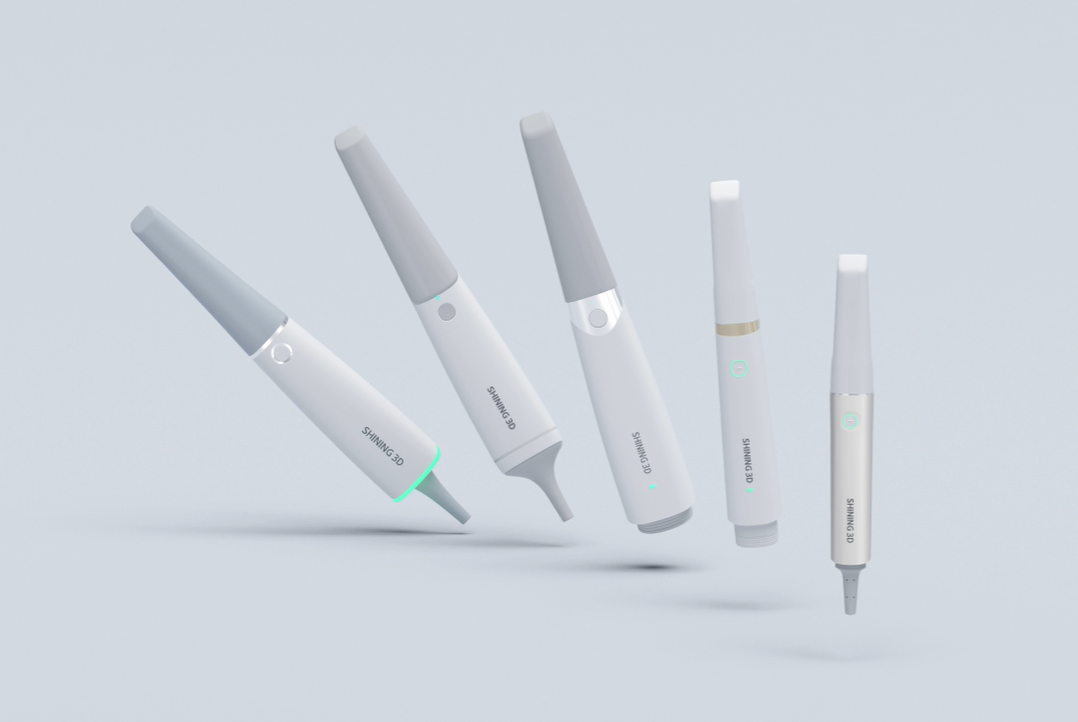
Traditional IOS vs IPG Intraoral Scanner: Understanding the Technical Differences
To make an informed choice, let’s break down their technologies:
1. What is the Traditional IOS and Its Core Features?
Traditional IOS typically utilizes structured light technology, which projects a series of specific patterns of structured light onto the tooth surface. Built-in cameras simultaneously capture the deformation of these light patterns caused by the teeth to construct a 3D model of the oral cavity. This process can be understood as taking numerous detailed local photos and then stitching them together into a complete picture.
Core features include:
l Mature Technology: Developed over many years, it is currently the mainstream in the market and can provide sufficient accuracy for most application scenarios.
l Multiple Market Choices: Examples include the SHINING 3D Aoralscan 3 Wireless, Aoralscan 3, and Aoralscan L.
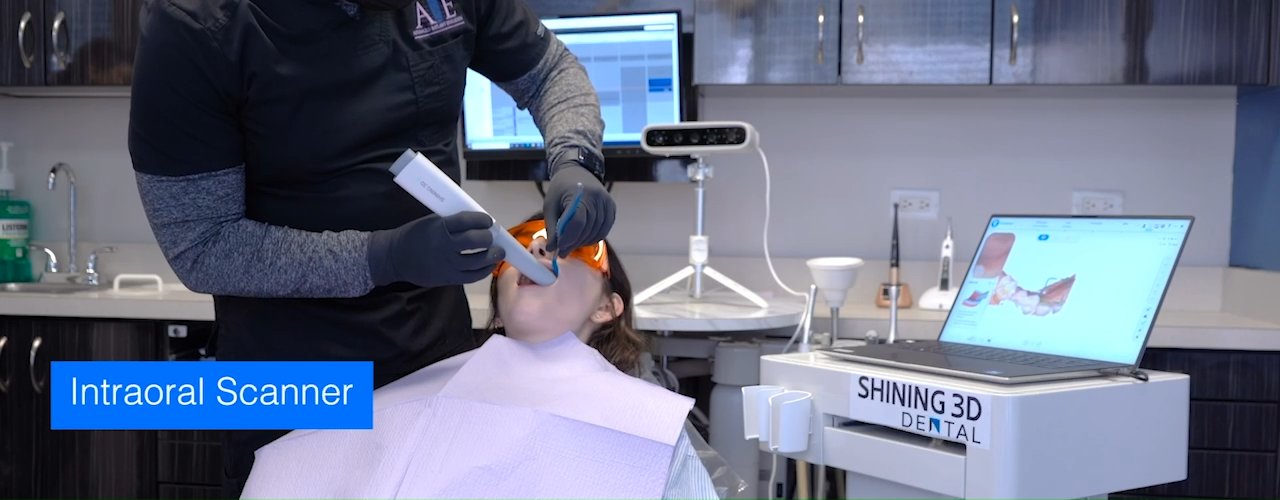
2. What is the IPG Intraoral Scanner and Its Core Advantages?
The IPG intraoral scanner is an intraoral photogrammetry scanning solution first launched by SHINING 3D DENTAL. It combines “photogrammetry + structured light” technologies. The working principle involves calculating the absolute coordinates of multiple high-precision coded scanbodies and the 3D coordinates of the coded points extracted by the IPG scanner, rapidly determining the relative positions of the scanbodies to capture the positions of teeth, gums, and implants.
Core advantages include:
l Extreme Accuracy: Up to 5μm, avoiding the stitching errors that may occur with traditional IOS.
l Strong Anti-Interference Capability: Unaffected by saliva or blood in the oral cavity, reducing the need for re-scans.
l Color Reproduction: Captures gum morphology, texture, and tooth color.
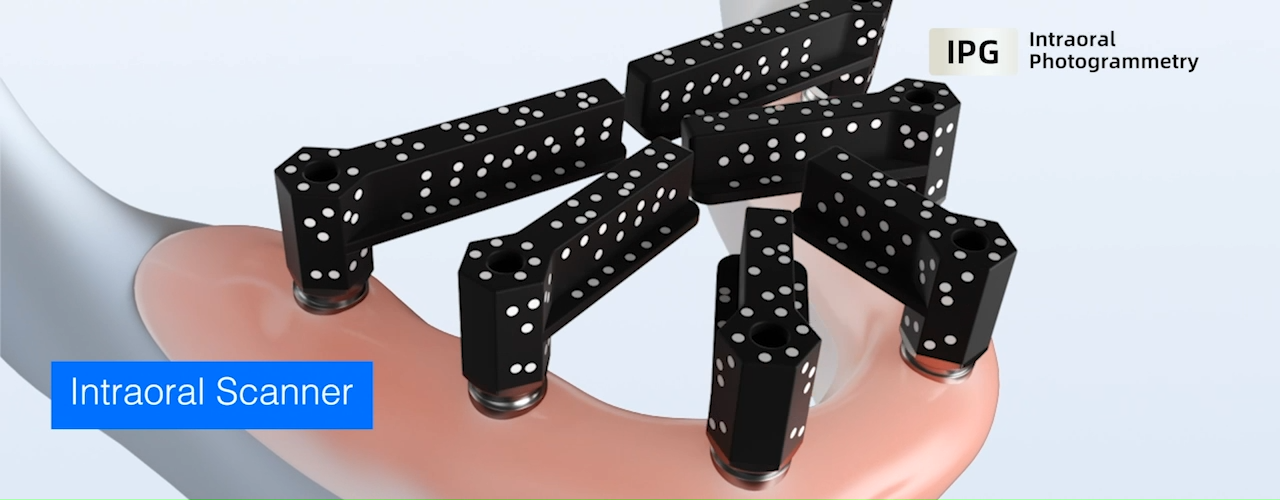
Comparing Traditional IOS vs IPG Intraoral Scanner
Next, let’s compare these scanners where it matters most for your clinic:
1. Purchase Cost
The initial investment is a primary consideration. Taking the SHINING 3D scanner portfolio as an example:
|
|
Aoralscan Elite Wireless |
Aoralscan Elite |
Aoralscan 3 Wireless |
Aoralscan 3 |
Aoralscan L |
|
Scanner Type |
IPG intraoral scanner |
IPG intraoral scanner |
Traditional IOS |
Traditional IOS |
Traditional IOS |
|
Reference Price |
$23,999 |
$20,999 |
$12,999 |
$10,999 |
$5,990 |
The SHINING 3D Aoralscan series offers a reliable entry into the IOS market, providing a cost-effective solution for general dental diagnostics and treatments. In contrast, the high-end Aoralscan Elite series, which utilizes photogrammetry technology, is priced higher due to its technological advancements. However, its value must be evaluated in light of its functions and the ROI in complex cases.
2. Clinical Application Scope
IOS is commonly used in daily dental practice, which is well-suited for single crowns, short bridges, night guards, and models for clear aligners.
However, when a clinic is committed to providing high-end implant services, such as edentulous implant cases, precision becomes a non-negotiable requirement. This is where photogrammetry intraoral scanners truly shine, offering significant brand differentiation for clinics performing such advanced treatments.
3. Accuracy in All-on-X Implant
In All-on-X implant cases, achieving passive fit of the prosthesis is a major challenge. The primary reason is the extremely high precision required for impressions, as even minor errors can lead to stress concentration.
Considering the potential stitching errors associated with traditional IOS, the IPG intraoral scanner, with its accuracy of up to 5μm, holds a distinct advantage in All-on-X implant cases. It addresses the passive fit challenge, enhancing patient satisfaction and providing clinics with a competitive edge.
Integrated 2-in-1 Design:
Additionally, the IPG scanner of the Aoralscan Elite series can function both as a standard IOS for capturing detailed images of dentulous cases and as a photogrammetry system for accurately recording implant positions in edentulous cases. This allows dentists to benefit from dual functions within a single device.
4. Tip Design and Efficiency
This may be easily overlooked, but the size of the scanning tip actually impacts scanning efficiency.
Compared to standard tips, IPG tips are designed to be larger. This design enables a broader field of view, meaning more data can be captured in a single scan. For scanning wide edentulous areas, it is more suitable and precise.
Which is More Suitable for Your Clinic?
Which is more economical for your clinic: traditional IOS or IPG intraoral scanners? The answer entirely depends on your business and development goals. An unsuitable scanner may ultimately be stored in a cabinet, leading to wasted clinic resources.
Choose IPG Intraoral Scanners If Your Clinic:
l Performs full-arch edentulous implants. This is the primary reason to invest in a photogrammetry dental scanner. Its unparalleled accuracy in All-on-X and similar complex cases justifies its value.
l Handles multiple dental implant cases, as the photogrammetry intraoral scanner is compatible with multi-implant and conventional implants.
l Manages aesthetic restorations, orthodontics, and other high-standard treatments where the benefits of enhanced precision will elevate your brand reputation.
l Plans to expand into complex treatment services in the future.
l Is committed to building a premium clinic brand.
Choose Traditional IOS If Your Clinic:
l Primarily focuses on routine dental treatments, such as single dental restorations, fixed bridges, simple implant cases, and orthodontics.
l Has limited budgets and does not require the extended functions of the IPG scanner. In this case, a traditional IOS represents a more practical investment.
In summary, the most cost-effective dental intraoral scanner is one that aligns perfectly with your clinic’s operational model and precisely meets the clinical needs.
About SHINING 3D Aoralscan and Aoralscan Elite Series
SHINING 3D DENTAL offers both traditional IOS and IPG scanners to meet the needs of different dental practices:
l Aoralscan Series: This IOS solution includes the Aoralscan 3 Wireless, Aoralscan 3, and Aoralscan L. They are equipped with both standard and mini scanner tips, providing an entry-level solution for clinics transitioning into digital dentistry.
l Aoralscan Elite Series: This IPG solution includes the Aoralscan Elite Wireless and Aoralscan Elite. They integrate photogrammetry technology and come with standard tips, mini tips, and additional IPG scanner tips, available in both wired and wireless versions. This is a high-end solution specifically designed for complex All-on-X implant cases.
Welcome to contact us for more details about SHINING 3D intraoral scanners and choose one for your dental clinics.
Share this on Social Media: