-
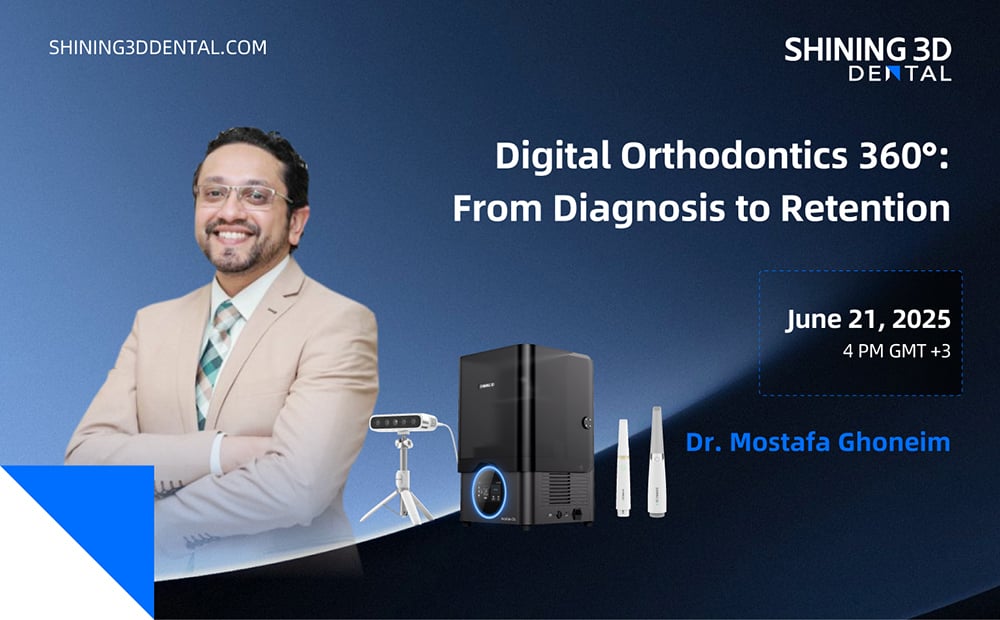
Identify the essential tools and technologies required to initiate a digital orthodontic practice, including intraoral scanners, face scanner, 3D imaging and software for simulation and case planning.
-
Understand how to integrate digital tools into routine clinical workflows, ensuring efficient data capture, treatment planning, patient communication, and case tracking.
-
Recognize the key benefits of transitioning to digital orthodontics, such as improved accuracy, streamlined workflows, enhanced patient experience, and better clinical outcomes.
-
Leverage digital technologies to improve diagnosis, treatment planning, and monitoring, through the use of data-driven insights and visual tools that support clinical decision-making.
_RGB-Apr-30-2025-10-31-45-8330-AM.png?width=152&height=42&name=SHINING%203D%20DENTAL%20LOGO%20(OS)_RGB-Apr-30-2025-10-31-45-8330-AM.png "SHINING 3D DENTAL LOGO")

.jpg "SHINING 3D DENTAL Logo")