_RGB-Apr-30-2025-10-31-45-8330-AM.png?width=152&height=42&name=SHINING%203D%20DENTAL%20LOGO%20(OS)_RGB-Apr-30-2025-10-31-45-8330-AM.png "SHINING 3D DENTAL LOGO")

.jpg "SHINING 3D DENTAL Logo")
Has your dental clinic ever faced challenges like these? Surgical guides are delayed before critical procedures. Patients’ dental impressions get damaged or lost during shipping or storage. All-on-X implant patients can’t receive immediate-load restorations on time.
Traditional dentistry has long relied on subtractive manufacturing, which involves longer processing times and design limits. To address these, Dental 3D printing offers a digital alternative, enabling rapid and accurate chairside production of surgical guides, temporary restorations, and other appliances through additive manufacturing.
What are the benefits of dental 3D printing? Is it worth it? Read on to learn more.
What Are the Benefits of 3D Printing in Dentistry?
The rapid evolution of 3D printing in dentistry turns it into a clinical necessity. For dentists, the benefits are reflected in clinical workflow and patient outcomes:
1. Faster Turnaround Time
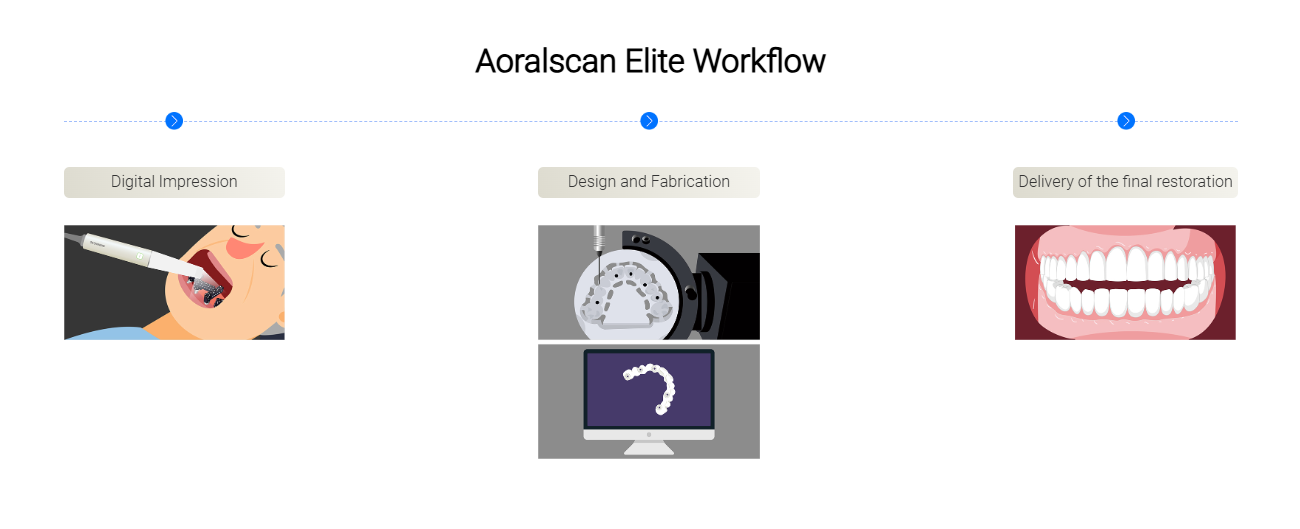
Time is valuable in a dental clinic. Traditional lab-based workflows often require days or more for dentures or guards. Adding a dental 3D printer to your clinic practice, "same-day delivery" becomes a reality. The simplified workflow is as follows:
-
Intraoral scanners capture a 3D image of the patient's teeth and oral structures.
-
Convert the scanned data into an accurate CAD model for designing custom restorations.
-
Connect to a 3D printer and print the final restoration.
Surgical guides, models, splints, and provisional restorations can be produced during a single session. Clinics no longer wait for lab work. When cases move faster, clinics can schedule more procedures without sacrificing quality.
2. Improved Precision
In a field where microns matter, 3D printing in dentistry offers a level of consistency.
Digital scans combined with dental 3D printing reduce errors caused by impression distortion, shipping damage, or manual trimming.
Advanced printers provide an accuracy of ±25μm, and intraoral scanners’ precision can reach 5μm. This high-resolution output ensures that restorations, from crowns to 3D printing dental implant components, fit the first time perfectly.
3. Cost Efficiency Over Time
In the long run, the economic benefits of a dental 3D printer are clear. First, milling removes a large amount of material during the manufacturing process. 3D printing is additive. It uses only the exact amount of resin needed. This reduction in material waste significantly lowers the "per-part" cost.
Second, labor costs will decrease because you no longer need to rely on manual methods to fabricate restorations for each patient. It is worth noting to invest in an easy-to-use printer.
Over hundreds of cases, these savings contribute directly to the clinic’s bottom line.
4. Digital Workflow Integration
If you invest in a 3D printer, it fits naturally into a digital workflow that includes intraoral scanning, CAD design, and CAM production. This improves communication between dentists and patients.
When planning implant cases, digital data flows from CBCT and scans into software. Surgical guides for 3D printing dental implants are designed and printed without physical impressions. This reduces workflow interruptions and improves planning accuracy.
Digital integration also supports remote collaboration. Designs can be reviewed and modified before printing, reducing guesswork.
5. Better Patient Experience
Patients care about comfort, time, and predictability. 3D printing in dentistry can meet all three needs. Digital scanning is non-invasive and more comfortable than traditional impressions. Same-day solutions also reduce the number of visits.
With oral scanning and 3D printed braces, orthodontic treatment planning becomes more visual. Patients can see the expected outcomes. Clear communication increases trust.
As a result, these enhanced experiences lead to higher patient retention and better reviews.
6. Enhanced Clinical Competitiveness
Offering services like same-day crowns, precise dental implant guides, or custom 3D printed brace sets your clinic apart. It allows clinics to handle more complex cases and provide efficient solutions.
7. Storage Convenience
Plaster models do take up clinic space and are prone to damage. This is especially true for high-volume practices, where these physical models require more careful management.
With a digital approach, patient cases are stored as a file on a server or in the cloud. If a patient loses their retainers, the clinic can simply pull up the digital record and print it again. No new impressions are needed.
Is Dental 3D Printing Worth It?
1. What Does Dental 3D Printing Save?
-
Time: Eliminating the waiting time for lab deliveries.
-
Lab Costs: Many routine restorations are completed in-house. The dependence on external labs decreases. This directly improves margins.
-
Materials: The additive manufacturing process significantly reduces material waste.
2. What Can Dental 3D Printing Bring?
-
More Cases: Faster turnaround means you can accept more cases.
-
High-Value Services: Denture 3D printer supports premium treatments, like clear aligner models or implant surgery with 3D printed surgical guides.
-
Clinic Reputation: Comfortable treatment procedures, clear treatment plans, and visualizable treatment outcomes enhance patient trust and improve the clinic's reputation.
Is 3D Printing the Future of Dentistry?
The data is clear: the global dental 3D printing market is projected to reach over $10 billion by 2030. [1] It is a question of "when" every clinic will adopt this technology.
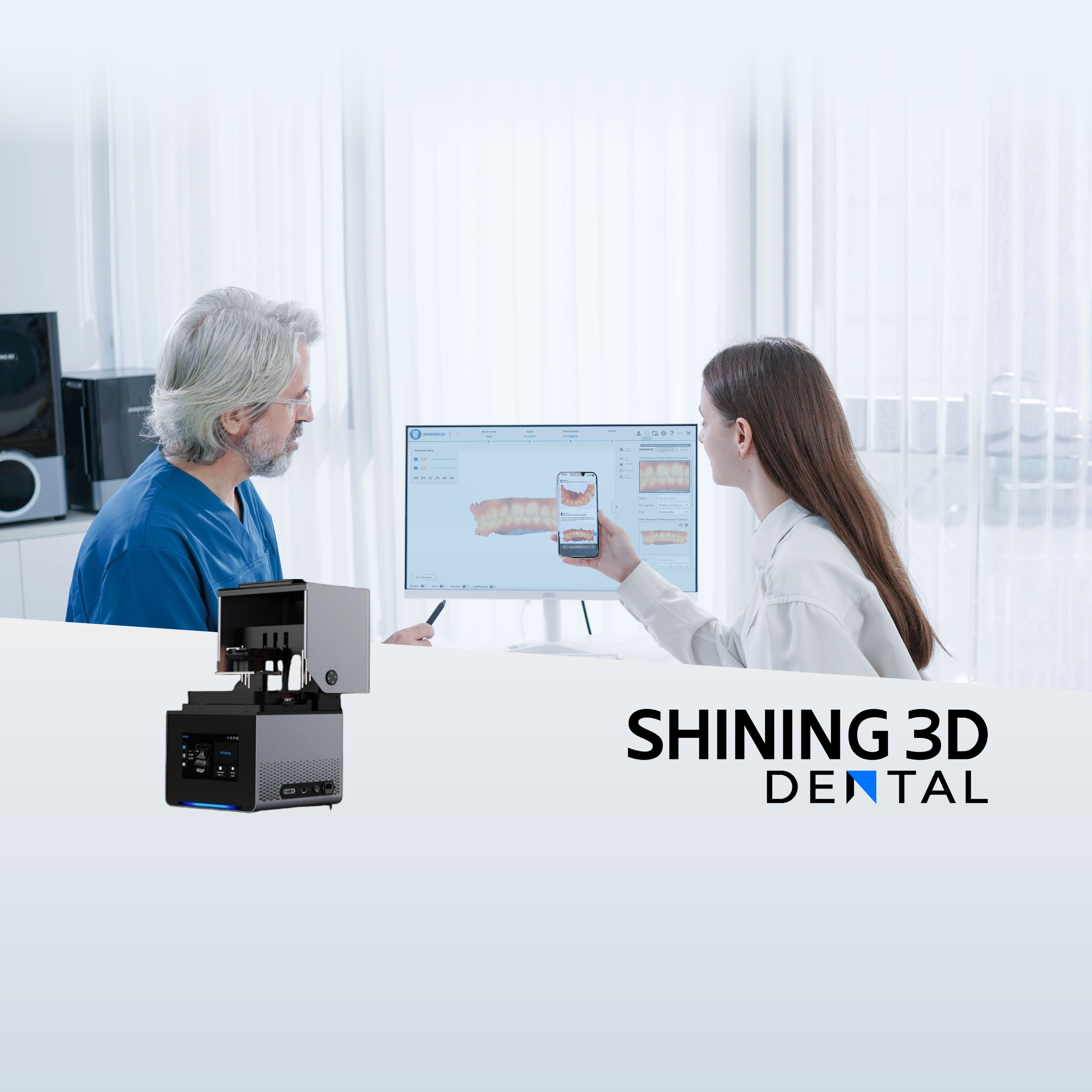
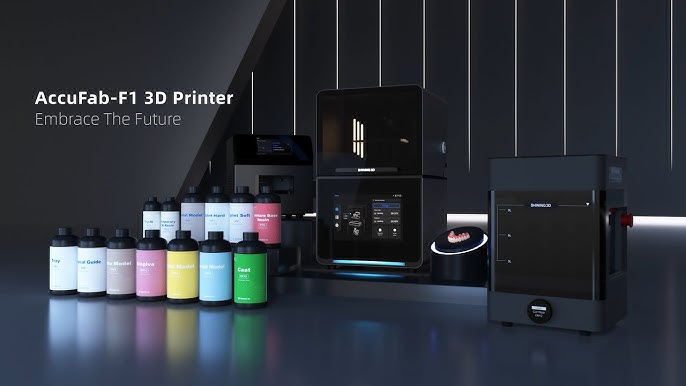
To stay ahead, you’ll need a reliable, high-performance 3D printer like the SHINING 3D DENTAL AccuFab-F1. Specifically engineered for the demands of modern clinics, the AccuFab-F1 offers:
-
Precision: ±25μm for clinical-grade accuracy.
-
Speed: Max 150 mm/h for same-day delivery.
-
Intelligence: AI-driven optimization and smart sensing for an easy-to-operate experience.
-
Versatility: An open material system ensures a seamless “scan-design-print” workflow and avoids compatibility issues.
For any questions about dental 3D printers or other dental devices like intraoral scanners and face scanners, feel free to contact SHINING 3D DENTAL!
FAQs
1. Can 3D-printed dental restorations be used permanently?
Currently, most 3D printers on the market, such as those from SHINING 3D DENTAL, are primarily used for temporary restorations, surgical guides, or model production. In the future, SHINING 3D DENTAL will introduce more advanced printing products.
2. Is 3D printing necessary for small dental clinics?
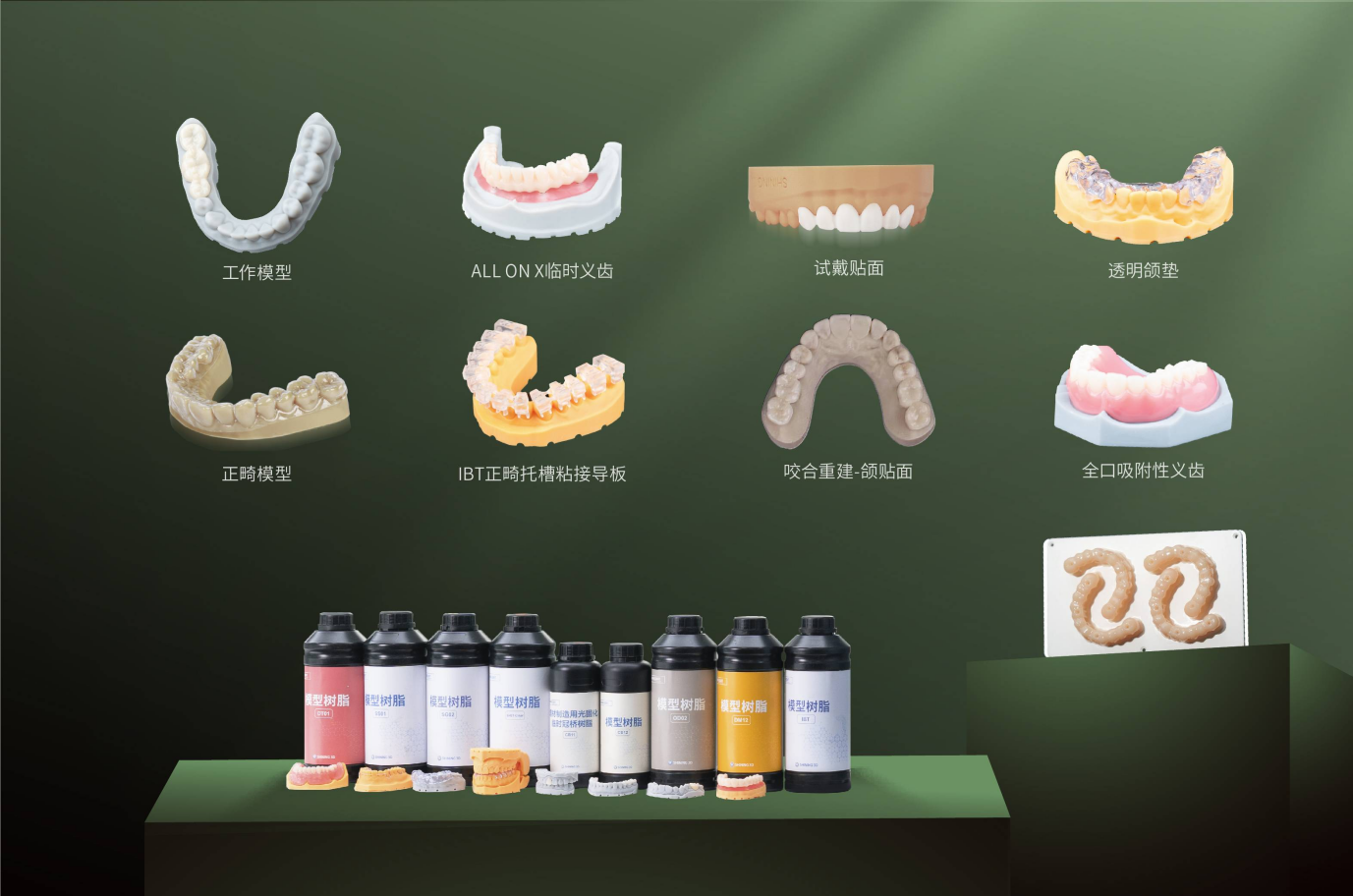
While the initial investment might seem significant, even small clinics benefit from the reduced lab fees and increased efficiency. A 3D printer for dentistry can handle many daily tasks, such as dentures, crowns and bridges, guards, models, splints, mock-ups, and guides.
References
[1] Global Dental 3D Printing Market to Hit USD 10.06 Billion by 2030 at 20.5% CAGR. Available at: https://www.globenewswire.com/news-release/2025/12/12/3204489/0/en/Global-Dental-3D-Printing-Market-to-Hit-USD-10-06-Billion-by-2030-at-20-5-CAGR.html (Accessed: 4 February 2026)
Share this on Social Media: