_RGB-Apr-30-2025-10-31-45-8330-AM.png?width=152&height=42&name=SHINING%203D%20DENTAL%20LOGO%20(OS)_RGB-Apr-30-2025-10-31-45-8330-AM.png "SHINING 3D DENTAL LOGO")

.jpg "SHINING 3D DENTAL Logo")

From Visualization to Quantifiable Assessment
How Clinical Practice Inspired a New Approach to Plaque Management with Aoralscan
Noriko Yoshikubo, RDH
Koike Dental Clinic, Japan
Digital dentistry is transforming the way we diagnose, communicate, and deliver patient care. However, some of the most meaningful innovations originate not in research laboratories or development centers, but in everyday clinical practice.
As a dental hygienist, I have long believed that plaque disclosure should be more than a visualization tool. While conventional plaque disclosure effectively highlights areas of biofilm accumulation, it does not provide a truly objective method for measuring oral hygiene status or tracking improvement over time.
This belief led me to propose a concept to SHINING 3D approximately one year ago: What if disclosed plaque could be scanned, digitally analyzed, and quantified using an intraoral scanner?
At the time, plaque assessment in daily practice relied heavily on visual evaluation and manual recording methods such as O’Leary’s Plaque Control Record. Although widely accepted, these methods require considerable time and can be influenced by differences in clinical experience and subjective judgment.
My goal was simple: to transform subjective plaque evaluation into a measurable and objective assessment.
Today, that concept has become reality through the Aoralscan Plaque Detection Function. By scanning disclosed tooth surfaces, clinicians can visualize plaque distribution in a color-coded 3D model and, more importantly, quantify plaque-covered surface areas through digital analysis. This innovation has the potential to redefine how preventive dentistry is practiced, documented, and communicated.
One particularly memorable case involved a woman in her sixties who had attended regular maintenance visits for many years. Despite brushing carefully every day, persistent plaque accumulation remained on the lingual surfaces of her lower anterior teeth and in the maxillary molar region. Although she had received repeated oral hygiene instruction using conventional plaque disclosure, she often expressed frustration, saying that she could not understand why plaque continued to remain despite her efforts.
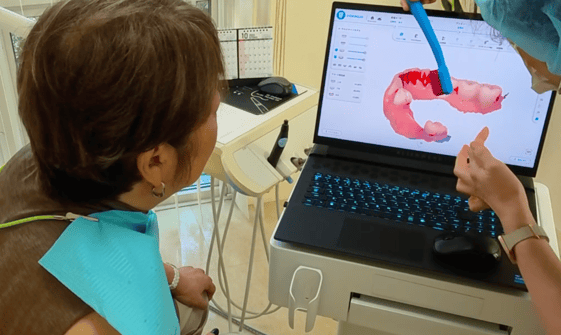
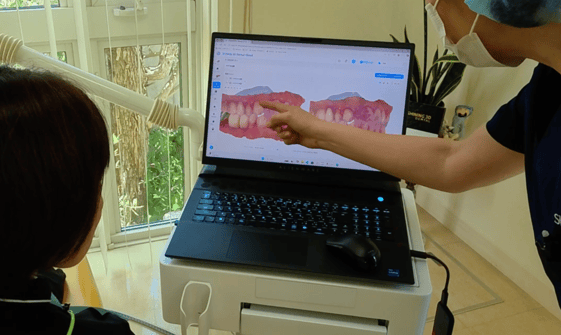
When we reviewed her Aoralscan plaque detection images together, she was genuinely surprised. Seeing her oral condition displayed in a rotatable three-dimensional model allowed her to recognize areas that had previously been difficult to understand. She quickly identified brushing patterns and areas that were consistently being missed. As a result, she became more motivated to use interdental cleaning aids and actively improve her home-care routine.
The true value of this technology lies not simply in detecting plaque, but in quantifying it.
For example, patients and clinicians can establish measurable goals: Which areas require additional attention to reduce plaque levels by 50%? Which sites contributed most to an increase in plaque accumulation? By combining visual information with objective numerical data, communication becomes clearer, patient education becomes more effective, and motivation for behavioral change increases significantly.
Today, SHINING 3D has successfully implemented digital plaque-area analysis and quantification, and some users have already begun incorporating this technology into clinical practice. The ability to compare data over time, visualize improvements in self-care, and standardize evaluation criteria among clinicians opens exciting new possibilities for preventive dentistry.
I believe the significance of this technology extends far beyond improving clinical efficiency. It enables patients to better understand their own oral health, recognize their progress, and take a more active role in maintaining it.
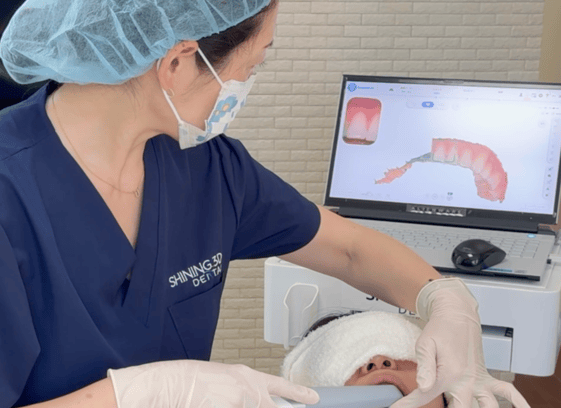
Intraoral scanners are no longer limited to restorative and orthodontic workflows. They are already evolving into powerful tools for preventive care management, patient communication, and long-term oral health monitoring.
As a dental hygienist, I am deeply encouraged to see an idea originating from everyday clinical practice become a tangible digital technology that can positively influence patient behavior. I hope that innovations such as this will continue to evolve and become a new standard in preventive dentistry.
I believe the future of preventive dentistry lies not only in making oral conditions visible, but also in making them measurable, shareable, and continuously improvable. The Aoralscan Plaque Detection Function represents an important step toward that future. By combining visualization with quantifiable data, it empowers both clinicians and patients to make more informed decisions and achieve better long-term oral health outcomes.
Share this on Social Media: