_RGB-Apr-30-2025-10-31-45-8330-AM.png?width=152&height=42&name=SHINING%203D%20DENTAL%20LOGO%20(OS)_RGB-Apr-30-2025-10-31-45-8330-AM.png "SHINING 3D DENTAL LOGO")

.jpg "SHINING 3D DENTAL Logo")
For edentulous patients, seeking All-on-X treatment is not only about dental implants, but also about the need for aesthetic teeth and precise occlusion. A well-functioning masticatory system impacts the patient’s social confidence and daily quality of life.
However, achieving this outcome is often challenging. How to ensure that All-on-X dental implants are efficient, cost-effective, and predictable?
Integrating intraoral scan, 3D facial scans, and jaw motion tracking technology presents a promising solution for precise denture design. This holistic approach is at the core of the SHINING 3D e-Motion Workstation system. Centered around a dental cart, the system achieves a powerful integration of technologies.
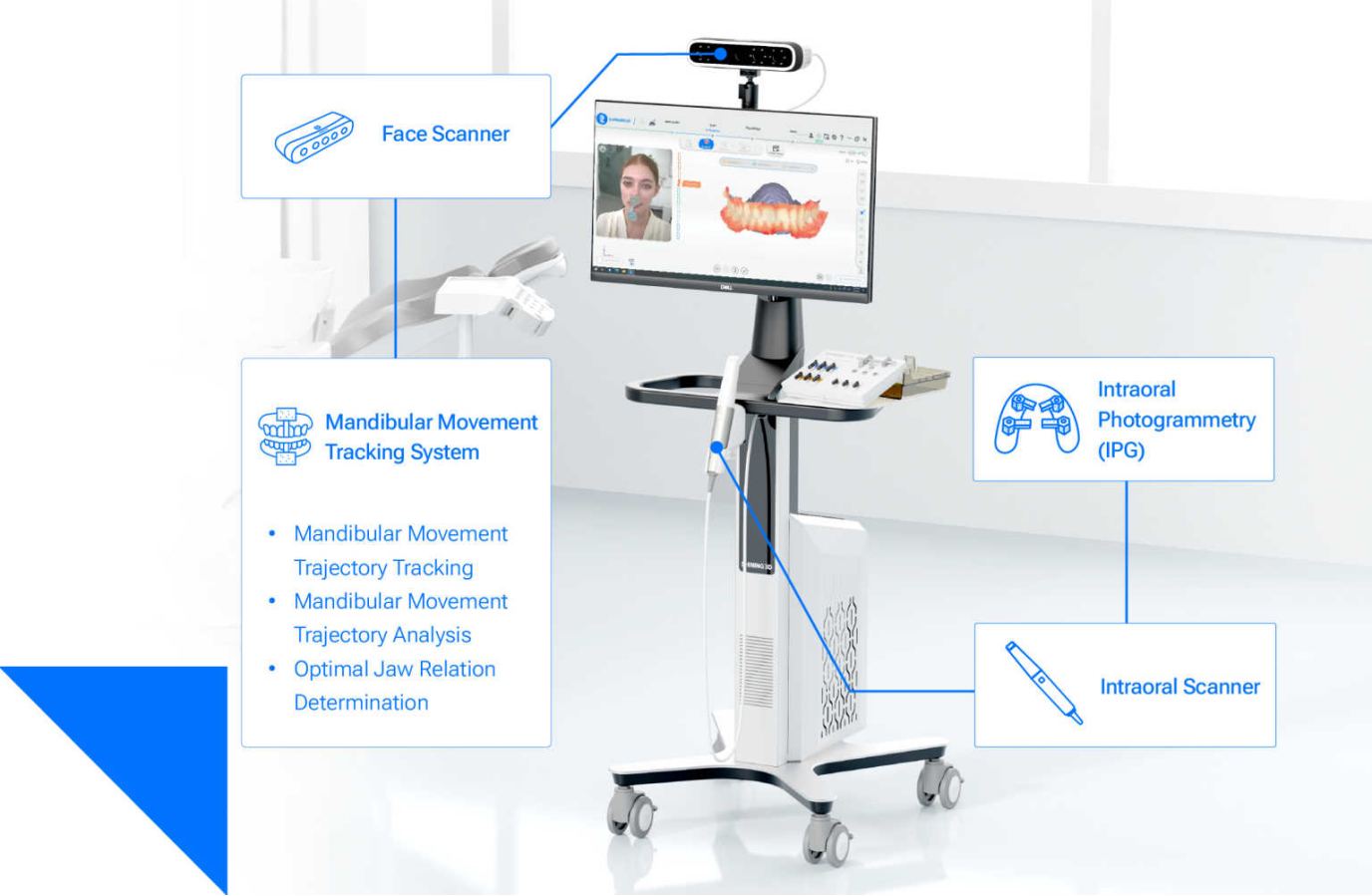
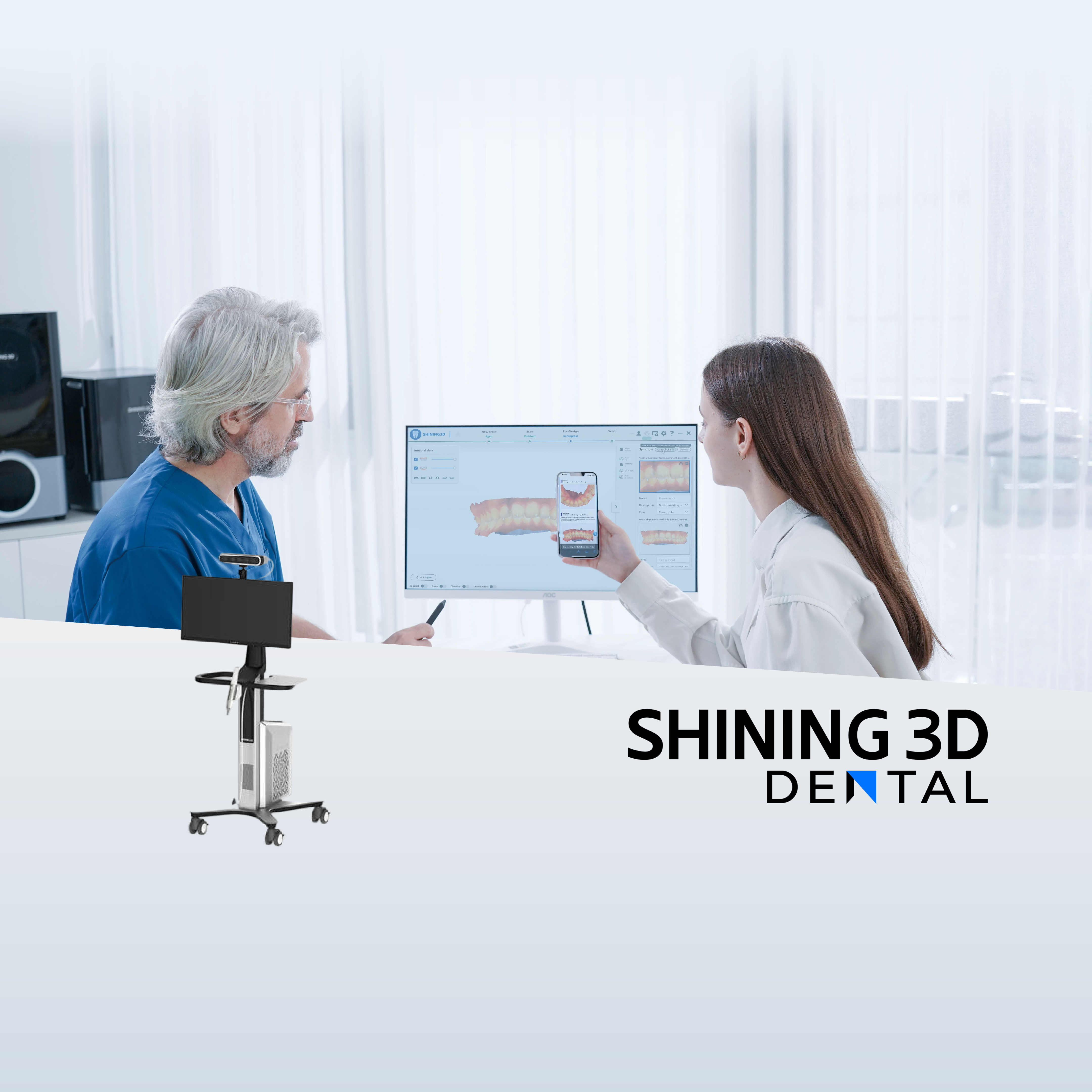
What is SHINING 3D e-Motion Workstation? (SHINING 3D Dental Cart)
The e-Motion Workstation is the world’s first all-in-one digital dental solution introduced by SHINING 3D DENTAL that integrates intraoral scanning, face scanning, and mandibular movement tracking functions.
This device can be regarded as a highly integrated “dental cart.” Dentists don’t need to operate multiple standalone devices and software platforms simultaneously. The e-Motion Workstation consolidates all functions into a single system, enabling the creation of a dynamic virtual patient model.
The SHINING 3D cart eliminates clutter and streamlines operational workflows. It significantly enhances dental treatment efficiency and predictability, making it particularly suitable for complex procedures such as All-on-X dental implants.
Limitations of Traditional Methods in All-on-X Implant
Traditional workflows for All-on-X often rely on a mix of conventional impressions, static data, and dentists’ experience, which can lead to several compromises.
1. Occlusal Challenges
Traditional methods can only evaluate occlusion in a static status. This is far from sufficient for All-on-X restorations, which need to withstand high-intensity occlusal forces. The challenges lie in:
l The inability to accurately capture the complex, multi-directional mandibular movement trajectories during talking, swallowing, and chewing.
l Occlusal adjustments heavily rely on the experience of technicians and dentists, introducing subjectivity and uncertainty.
This may lead to improper occlusion and uneven force distribution on the restoration, which can, over time, cause complications such as alveolar bone resorption, screw loosening, or even restoration fracture.
Achieving occlusal symmetry, harmony, and stability requires support from dynamic occlusal data.
2. Aesthetic Uncertainty
Another challenge with traditional All-on-X procedures is the risk involved in smile design. Since the patient is edentulous, the restoration directly determines the contour and aesthetics of the lower third of the face. Particularly for patients who require restoring occlusal vertical dimension (OVD), a correct OVD helps maintain the natural facial contour and fullness, preventing a sunken and aged appearance. Traditional limitations include:
l There is a lack of objective data to support how the restoration affects the smile line, lip support, chin projection, and overall facial proportions.
l Heavy reliance on the dentist’s aesthetic sense and experience may lead to a stiff, unnatural-looking smile after restoration, failing to meet the patient’s expectations for aesthetics.
3. Space Limits
All-on-X dental implants can effectively restore masticatory function, but they require high precision. Even minor deviations in the angle, depth, or position of the implants can affect passive fit, leading to surgical risks. Space limitations are:
l Typically, 4 to 6 implants are needed to support a full arch of teeth, placing significant demands on the patient's jawbone volume. Insufficient bone mass can directly restrict implant placement.
l To ensure safety, implants must avoid critical anatomical structures, further reducing the available ideal implantation space.
Given the individualized oral conditions, occlusal relations, and bone morphology of each patient, clinicians must rely on technical expertise and experience to adjust implant placement. Achieving stability and balance within such confined spaces involves a process with little room for error.
How Does SHINING 3D Dental Carts Help?
The limitations of traditional methods lie in the lack of objective data, and the SHINING 3D dental cart is designed precisely to overcome it by integrating data and creating a virtual patient, providing an innovative solution for All-on-X dental implants.
1. Mandibular Movement Trajectory Tracking
The mandibular movement tracking function of the SHINING 3D dental cart directly records the patient’s true jaw motion trajectories (such as protrusion and opening-closing movements).
By integrating these data with intraoral scans, a virtual model is generated, clearly displaying occlusal contact dynamic data of the teeth during different movement states, rather than being limited to a certain state.
As a result, dentists can identify and eliminate potential occlusal interference in the All-on-X design phase, laying a data foundation for achieving long-term occlusal harmony and stability.
2. Mandibular Movement Trajectory Analysis
Next, the SHINING 3D cart integrates the recorded condylar and incisal movement paths with the patient’s CBCT imaging data to create a 3D model of the patient's mandibular structure. This means that oral movements are no longer isolated data but are transformed into a visualizable 3D solution.
Through this integrated analysis, dentists can evaluate and optimize the design of the restoration, ensuring that the final occlusal scheme is not only functionally efficient but also aligns with the patient's joint physiology and aesthetic needs.
3. Optimal Jaw Relation Determination
Finally, the dental cart determines the most suitable vertical dimension based on the theoretical difference between the vertical dimension at rest (VDR) and the occlusal vertical dimension (OVD). Plus, it utilizes 30 open-close mouth movements to achieve an appropriate horizontal jaw relationship. It then outputs precise prosthetic design parameters, thereby ensuring the “optimal solution” for the stability of the restoration.
The restoration, designed and fabricated based on this optimal jaw position, ensures “passive fit” of implants, meaning the dental bridge can be precisely seated onto the implants without inducing stress. This is a critical consideration in All-on-X procedures.
Ultimately, the SHINING 3D Elite cart solution unifies the complex workflow of All-on-X. In addition to providing exceptional diagnostic and design capabilities, it eliminates the need for operators to switch between different devices, significantly reducing the potential for human error and data misalignment.
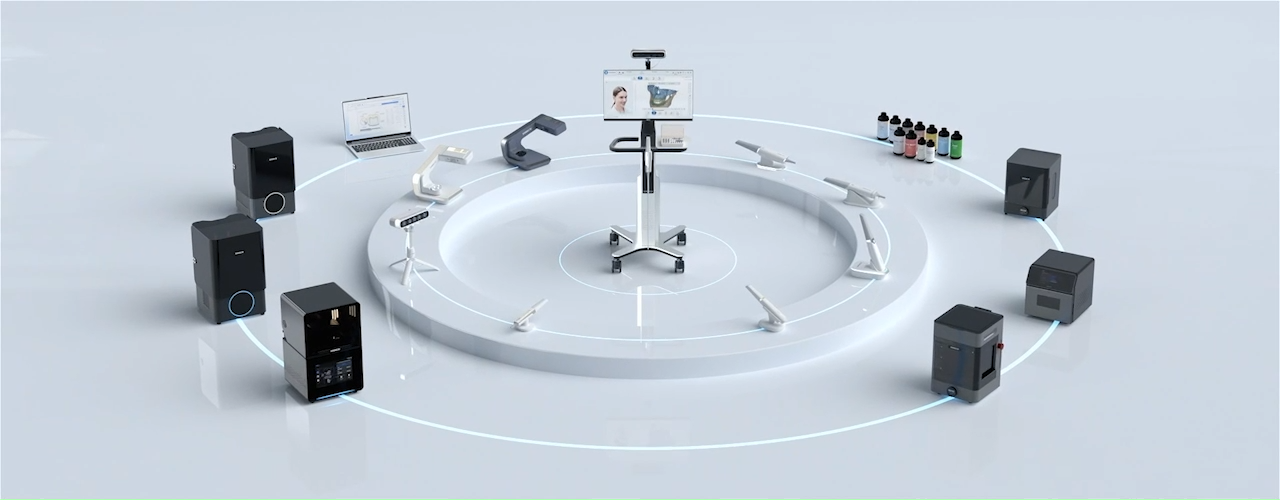
Enhanced All-on-X Workflow with SHINING 3D Dental Carts
Implementing the dental scanner cart into your All-on-X treatment creates a seamless and highly accurate digital workflow:
l Comprehensive Data Capture: The process begins with a full data capture: IPG intraoral scanning of the arches and implant positions, a 3D face scan, dynamic jaw motion data, and the patient’s CBCT data.
l Virtual Patient Creation: The system aligns all data to construct a "virtual patient" that includes skin, bones, teeth, soft tissues, and mandibular movement.
l Bite and Aesthetics Analysis: Based on the patient model, the occlusal relation is diagnosed, and a digital smile design is performed to evaluate aesthetic outcomes and lip support.
l CAD/CAM Design: Both temporary and final restoration designs are completed here. The designs are based on dynamic jaw motion, ensuring a perfect passive fit of the restorations.
l 3D Printed Temporary Dentures for Immediate Load: The SHINING 3D intraoral scanner cart connects to a 3D printer to produce high-precision temporary dentures for the immediate loading phase of All-on-X.
l Final Prosthesis Delivery: The final prosthesis, fabricated through milling, also achieves exceptional precision. The restoration not only ensures excellent passive fit but also delivers optimal occlusion and enhances aesthetics.
What can the SHINING 3D e-Motion Workstation bring?
The integrated workflow and precise data enhance clinic efficiency and patient satisfaction. If you are considering upgrading your clinic’s All-on-X implant solution, feel free to contact SHINING 3D DENTAL for more information about this dental cart!
Share this on Social Media: