_RGB-Apr-30-2025-10-31-45-8330-AM.png?width=152&height=42&name=SHINING%203D%20DENTAL%20LOGO%20(OS)_RGB-Apr-30-2025-10-31-45-8330-AM.png "SHINING 3D DENTAL LOGO")

.jpg "SHINING 3D DENTAL Logo")

While the advancement of digital dentistry has solved many issues, the accuracy of full-arch edentulous implants remains a challenge that cannot be overlooked. When the span of a dental bridge is large, small errors can be accumulated, making passive fit difficult to achieve.
The good news is that SHINING 3D IPG (Intraoral Photogrammetry) scanners have effectively addressed this issue.
What is an IPG intraoral scanner? It is a handheld device that combines photogrammetry and structured light technology. The working principle involves placing coded scanbodies inside the oral cavity and using their 3D and absolute coordinates to calculate the implant position. This avoids the errors caused by IOS “stitching” methods and is especially suitable for All-on-X implants.
Here are the benefits of IPG intraoral scanners vs alternatives:
.png?width=1519&height=805&name=%E5%9B%BE%E7%89%871(6).png)
Horizontal Scan Bodies Easier Capture
SHINING 3D IPG scanners adopt a horizontal scan body design. Compared with vertical scan bodies, the horizontal layout increases the scanner’s field of view in narrow intraoral spaces, allowing the software to recognize scan bodies faster and more stably.
Dentists do not need complex multi-angle rotations; simply moving the scan head horizontally completes the capture, reducing operational difficulty.
.png?width=940&height=308&name=%E5%9B%BE%E7%89%871(7).png)
Elongated HACS Besides Can Reach Pterygoid Area Easier Than Alternative
In full-arch implant cases, especially those involving the pterygoid area, conventional intraoral scanners often struggle to capture the distal abutment positions due to probe size and obstructions.
IPG is equipped with an elongated HACS (High-Accuracy Coded Scan) kit. It is part of the Aoralscan Elite and Aoralscan Elite Wireless intraoral scanner + IPG package.
This elongated design allows the scanning probe to more easily capture implant positions in the pterygoid region without causing significant patient discomfort, ensuring more complete data acquisition.
.png?width=1441&height=1045&name=%E5%9B%BE%E7%89%871(8).png)
One Device for All Capture
In traditional digital workflows, clinicians need to switch between multiple devices. For example, an EPG system uses a photogrammetry machine to measure implant positions, followed by a standard IOS to scan soft tissues.
With IPG, a single device can capture implant positions and soft tissue data. This integrated workflow avoids errors between multiple devices and reduces hardware investment for your clinic.
In addition, this also means one IPG scanner can cover all intraoral scanning needs in your practice.
.png?width=1311&height=543&name=%E5%9B%BE%E7%89%871(9).png)
IOS and IPG Files are Linked
Data alignment is often a complex step in full-arch implant workflows. In a dental photogrammetry workflow, the implant data generated by the IPG system is directly linked with the soft tissue data captured by the IOS.
This means that during restoration design, there is no need to manually handle files from different sources. The system automatically integrates implant and soft tissue data to generate a 3D oral model.
This reduces the risk of alignment errors, providing greater patient safety.
Precision Capture of MUA Position
MUA (Multi-Unit Abutments) are used to connect dental implants to restorations. They help correct implant angulation differences, improve passive fit, and allow screw-retained restorations without the need for cement.
The IPG system’s coded scan bodies can connect to MUAs. The scanner identifies the patterns on these scan bodies to calculate the precise position of the MUAs. This process is unaffected by surrounding soft tissues, saliva, or blood.
Reduced Stacking Errors
Conventional intraoral scanners generate oral models by stitching oral images together. During long-path scans, this can easily cause stacking errors, and the longer the scan path, the greater the cumulative error.
Photogrammetry dental scanners, however, directly calculate the coordinates of the coded scan bodies, eliminating stacking errors at the source and improving implant placement accuracy.
Increasing Time for Same-day Design
Because IPG scanners can quickly capture precise 3D models, they significantly reduce the time needed for same-day design. Dentists can generate digital impressions and move directly into CAD design without delays caused by inaccurate scans or repeat imaging.
This efficiency allows busy clinics to handle more cases in a single day.
Increasing Time for Same-day Prints
For patients seeking immediate loading, prolonged waiting under edentulous conditions can affect chewing function, aesthetics, and overall quality of life.
Every minute saved by an IPG scanner is therefore critical. Accurate SHINING 3D photogrammetry dental data can be integrated into a 3D printer, producing temporary restorations in just tens of minutes. Patients receive timely treatment, and clinic workflow efficiency is significantly improved.
.png?width=758&height=501&name=%E5%9B%BE%E7%89%871(10).png)
IPG Scanner vs Traditional IOS vs EPG Scanner
The following table compares the IPG scanner, intraoral scanners (IOS), and extraoral photogrammetry (EPG) solutions, making it easy for you to understand the differences between the IPG scanner and the other two types of scanners on the market:
|
Feature |
IPG Scanner |
Traditional IOS |
EPG Scanner |
|
Accuracy |
Very High (Photogrammetry-based) |
Moderate |
High (May be affected by the data integration) |
|
Convenience |
Extremely high (handheld) |
High |
Low (requires external bracket/two-person operation) |
|
Device Integration |
One device for all |
Multiple devices needed |
Separate devices |
|
Data Linking |
IOS & IPG linked |
IOS only |
Partially linked |
|
MUA Precision |
Excellent |
Standard |
Excellent |
|
Workflow Efficiency |
High |
Medium |
Medium |
|
Same-Day Design Support |
Optimal |
Limited |
Moderate |
|
Cost |
High |
Moderate |
Extremely high |
SHINING 3D DENTAL IPG Intraoral Scanners
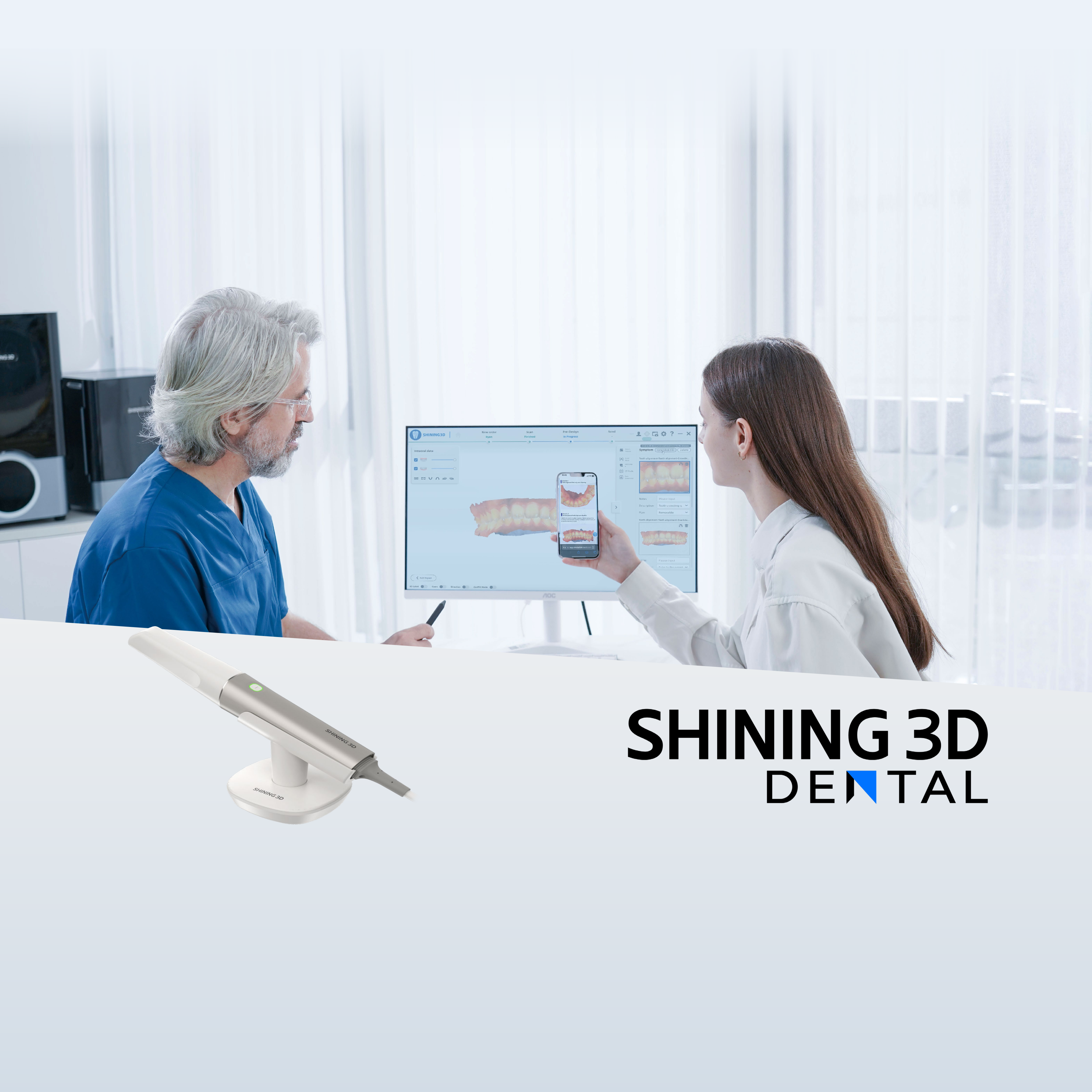
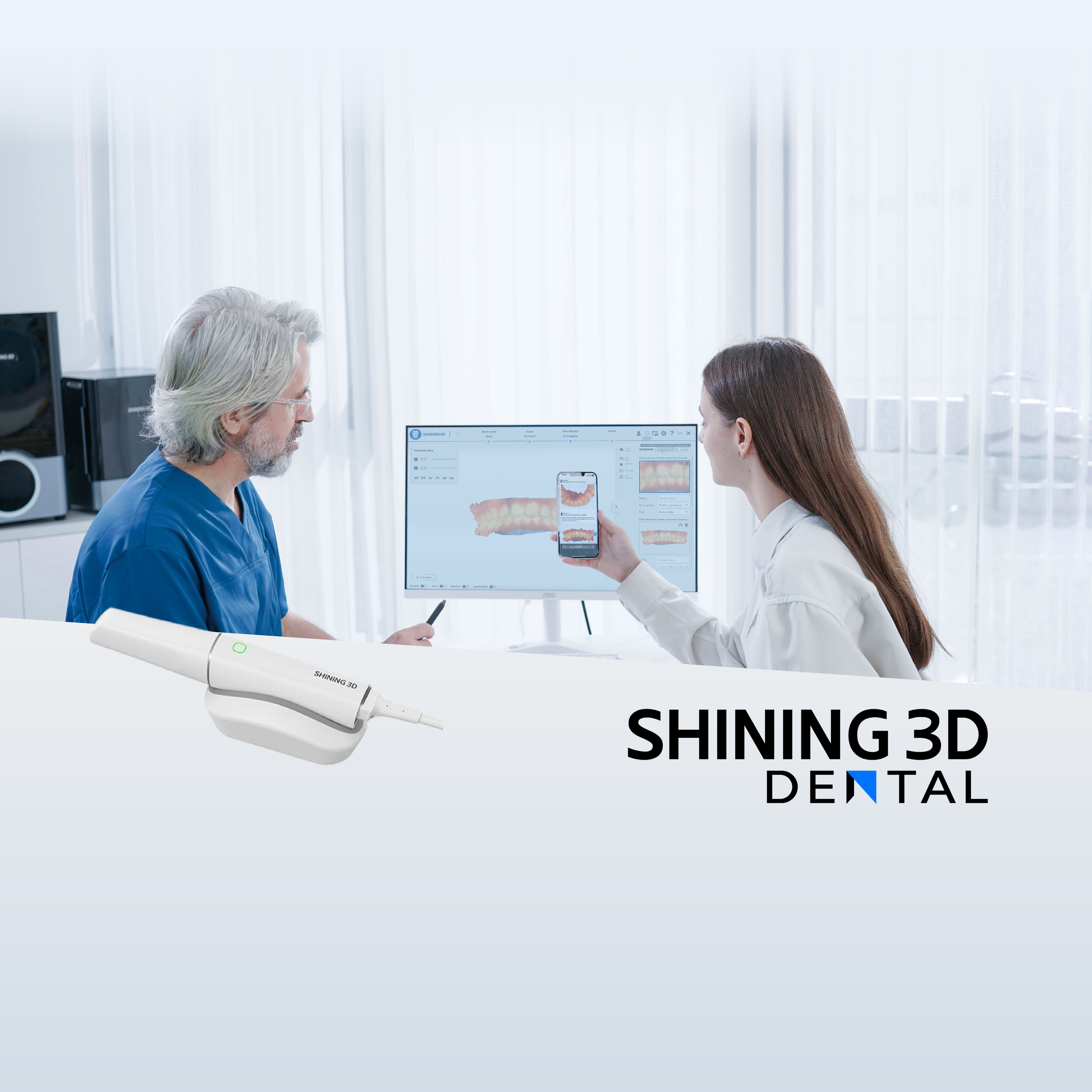
On September 10, 2024, SHINING 3D DENTAL officially launched the IPG scanner: the Aoralscan Elite. This scanning system, based on intraoral photogrammetry technology, has already been rigorously tested in the market.
The scanner achieves an accuracy of up to 5 μm and features larger IPG tips compared with standard tips, enhancing both clarity and precision. The dedicated horizontal scan body kits allow even challenging scans in the pterygoid region to be completed with ease. You can choose between the Aoralscan Elite or Aoralscan Elite Wireless versions, depending on the size and needs of your clinic.
If you are seeking the optimal combination of speed, precision, and ease of use for your practice, please feel free to contact us for more detailed information.
Share this on Social Media: